For Reflux, Hiatal Hernias, and Related Conditions

Focused Expertise. Personalized Care.
Specialized care for acid reflux, hiatal hernias, and conditions affecting the upper digestive tract, particularly the esophagus and stomach, in the Houston area and beyond.
Foregut care focuses on conditions involving the esophagus, stomach, and diaphragm—the structures that help food travel toward the stomach and keep stomach contents from flowing backward. These conditions can cause persistent heartburn, regurgitation, food sticking in the chest, and other troublesome symptoms.
Evaluation and treatment of Foregut conditions often involve collaboration among surgeons, gastroenterologists, and other specialists with expertise in the upper digestive tract. This collaborative approach helps ensure that recommendations reflect your condition and the full range of appropriate diagnostic and therapeutic options.
A Thoughtful, Individualized Approach.
Seeing a surgeon does not automatically mean you need surgery.
My practice focuses on benign conditions affecting the esophagus, stomach, and diaphragm. This focused expertise allows me to understand these conditions in depth and consider the full range of treatment options—not simply whether an operation can be performed.
Thoughtful decision-making is an important part of personalized care. We look beyond individual symptoms to understand the underlying condition, your medical history, and your goals. Depending on the diagnosis, the best approach may involve medication, lifestyle changes, monitoring, endoscopic treatment, or surgery.
Surgery remains an important tool when it offers the greatest potential benefit, but it is not the automatic answer simply because you are seeing a surgeon.
Our goal is to combine focused expertise with thoughtful, individualized decision-making to help you receive the care that is right for you.
Common Reasons to Seek Foregut Care
Heartburn, Acid Reflux, and Regurgitation
Persistent heartburn, sour fluid coming back into the mouth, or food returning after a meal may be signs of gastroesophageal reflux disease (GERD).
Food Sticking in the Chest
Food that seems to stick in the chest, takes too long to go down, or comes back up may indicate a condition affecting the esophagus. Evaluation can help identify the cause and guide treatment.
Hiatal Hernias or Upper Abdominal Discomfort
A hiatal hernia may contribute to reflux, chest or upper abdominal discomfort, regurgitation, or other digestive symptoms. The appropriate treatment depends on the type of hernia, its symptoms, and the patient’s overall health.
Poor Quality of Life
If persistent upper digestive issues are affecting your quality of life, or antireflux medication side effects are disrupting health or peace of mind, an evaluation may be appropriate.
Conditions We Evaluate and Treat
Our practice focuses on benign foregut conditions. Treatment recommendations depend on the diagnosis, severity of symptoms, previous treatments, and individual goals.
Gastroesophageal Reflux Disease
GERD occurs when stomach contents repeatedly flow backward into the esophagus, causing symptoms such as heartburn, sour fluid reflux, and regurgitation. Over time, reflux may contribute to inflammation or damage to the esophageal lining.
Treatment may include lifestyle changes, medication, and further testing to confirm the diagnosis and assess the severity of reflux. For appropriately selected patients whose symptoms persist or whose condition warrants an intervention, surgical options may be considered.
The goal is to identify the cause of symptoms and determine whether medical, endoscopic, or surgical treatment offers the best approach.
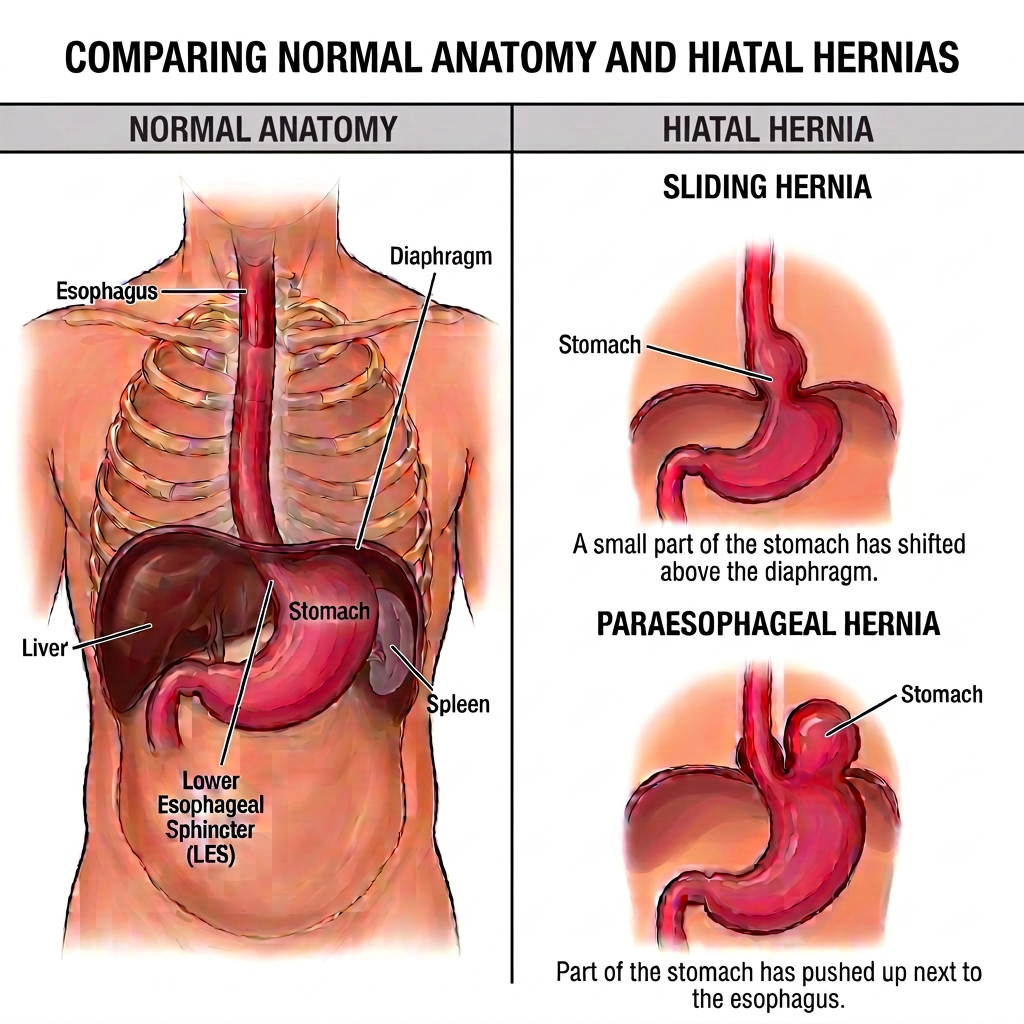
Hiatal Hernias: Sliding and Paraesophageal
A hiatal hernia occurs when part of the stomach moves upward through the opening in the diaphragm. Some hiatal hernias contribute to reflux, while larger paraesophageal hernias may cause pressure, discomfort, difficulty eating, or other complications.
Not every hiatal hernia requires surgery. Recommendations depend on the type and size of the hernia, symptoms, associated conditions, and risk of complications. When repair is appropriate, surgery may help address the hernia and its effects.
Esophageal Dysphagia (Difficulty Swallowing)
A sensation that food sticks in the chest, takes too long to pass, or returns after swallowing may be associated with narrowing of the esophagus, inflammation, reflux-related damage, or a disorder affecting esophageal movement.
Evaluation may include upper endoscopy, imaging, or esophageal motility testing, depending on the symptoms and clinical history. Treatment varies with the underlying cause and may include medication, endoscopic procedures, or surgery in selected cases.
This practice focuses on conditions affecting the esophagus and the passage of food toward the stomach. Problems involving the mouth or throat may require evaluation by an ear, nose, and throat specialist or another appropriate clinician. Symptoms alone do not always reliably identify where a swallowing problem originates, so appropriate evaluation is important.
Achalasia
Achalasia is an uncommon disorder in which the esophagus has difficulty moving food toward the stomach and the lower esophageal sphincter does not relax normally. Symptoms may include food or liquid sticking in the chest, regurgitation, and difficulty getting food or liquid down.
Achalasia has no definitive cure, but treatments can improve the passage of food and relieve symptoms. Options may include endoscopic treatment or surgery, depending on the individual case.
These treatments address the effects of the disorder and can provide meaningful relief, but they do not restore the esophagus to a completely normal state. Careful evaluation and individualized treatment planning are important.
Barrett’s Esophagus
Barrett’s esophagus is a change in the lining of the lower esophagus that is often associated with chronic acid reflux. It is considered a precancerous condition because it can increase the risk of esophageal adenocarcinoma over time.
The risk of progression is generally low for patients whose biopsies show no dysplasia, and Barrett’s esophagus does not mean that a person has cancer. However, appropriate evaluation and follow-up are important.
Management may include reflux treatment and periodic endoscopic surveillance. When dysplasia is present, endoscopic treatment may be recommended, depending on the findings. Barrett’s esophagus alone does not automatically require surgery. We work with gastroenterologists to help coordinate appropriate evaluation and treatment.
Gastroparesis
Gastroparesis is a disorder in which the stomach empties more slowly than normal, potentially causing nausea, vomiting, early fullness, persistent bloating, and difficulty maintaining adequate nutrition.
Gastroparesis can be challenging to manage and has no single definitive cure. Treatment typically requires an individualized, multidisciplinary approach that may include dietary adjustments, medication, nutritional support, and other therapies.
Procedures or surgery may help selected patients with specific symptoms or complications when other treatments have not provided sufficient relief. These interventions address the effects of the disease rather than curing the underlying disorder. Careful evaluation is essential to determine whether an intervention is likely to provide meaningful benefit.
Other Conditions
Other benign conditions may affect the esophagus, including strictures (narrowing), inflammation, and eosinophilic esophagitis (EoE), an inflammatory condition that can cause difficulty swallowing. Treatment depends on the underlying diagnosis and may involve medication, dietary management, endoscopic dilation, or other interventions. Some conditions are best managed primarily by a gastroenterologist, while others may benefit from surgical evaluation.
Our focus is to help identify the problem, clarify appropriate treatment options, and coordinate care with the specialists best suited to each patient’s needs.
Comprehensive Care Through Collaboration
Foregut conditions often require more than one type of expertise. We work closely with gastroenterologists to coordinate diagnostic testing, medical management, endoscopic therapies, and surgical evaluation when appropriate.
When symptoms or test results raise concern for a possible malignancy, we help facilitate appropriate evaluation and referral to specialists who focus on cancer care. Our practice focuses on benign foregut conditions rather than the treatment of malignant disease.
Take the Next Step
If you are experiencing persistent reflux, food sticking in your chest, symptoms associated with a hiatal hernia, or another concern involving the foregut, an evaluation can help clarify the cause and determine the most appropriate next step.
Focused Expertise. Personalized Care. Our goal is to help you understand your condition and make an informed decision about your care.
Contact our office to discuss your concerns and whether a foregut evaluation may be appropriate.

